Hong Kong Corals & the Associated Marine Life
|
Hong Kong Corals & the Associated Marine Life
Phylum Mollusca Mollusca is the second largest phylum after Arthropoda. It consists of 7 classes and contains about 100,000 living species, plus an additional 60,000 known fossil species. About half of the species are marine and the rest are freshwater or terrestrial. It is difficult to formulate a simple definition for these molluscs because they are extremely diverse in their forms. Generally, molluscs are derived from a fundamental body plan, a head with well-developed sensory organs and a large soft body mass containing all internal organs. Most molluscs possess a calcium carbonate shell and a muscular foot. However, evolutionary change in some groups has resulted in reduction, internalization or complete loss of the shell, as well as reduction or modification of the muscular foot. Many molluscs are commercially significant. Cuttlefish, octopus, many bivalves and various gastropods are highly prized food. Snails & Sea Slugs (Class Gastropoda) There are about 35,000 described species of gastropods in six sub-classes.
Sea snails have a muscular foot used for locomotion or attachment. Mucus is secreted at the foot's front end to reduce friction during movement. When disturbed, the foot is completely retracted into the shell. Some snails have a "trapdoor" or operculum to seal the aperture for further protection. Most snails have a unique file-like mouth part called the radula. Herbivorous species use it to rasp or cut algae from rock. In carnivorous cone shells, the radula is modified into a harpoon-like structure for injecting toxin into their preys. It could also be modified into a drill for drilling holes on the prey's shell for other carnivorous species. Some carnivorous snails, such as Conus geographus, can hunt vertebrates. Their neurotoxin venoms are fatal to humans. Some snails in the genus Drupella attack and kill stony corals. They line up around the living coral and consume the coral tissue with their long proboscis.
|
||||||||||||||
|
|
||||||||||||||
|
||||||||||||||
|
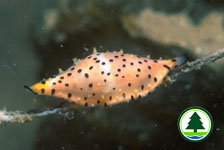
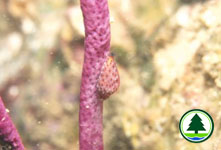
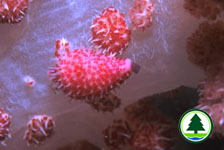
This tiny cowrie, which rarely exceeds 1 cm in length, lives on red soft coral Dendronephthya sp. The cowrie's mantle provides extremely good camouflage for the snail, having white filaments to mimic the tissue and white spicules of the host. While it is a parasite feeding on its host's tissue, it seems to cause little harm to the host. |
||||||||||||||
|
||||||||||||||
|
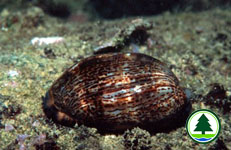
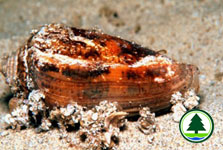
The beautiful and distinctive Arabian cowrie is abundant in local waters. The bilobed mantle, which emerges from the shell can be extended to cover the outside of the shell completely. It has special cells that secrete the calcium carbonate matrix of the shell to maintain its rich, glossy appearance. |
||||||||||||||
|
|
||||||||||||||
|
|
||||||||||||||
|
This conch shell can reach a maximum length of 7 cm. Species in the genus Strombus are herbivorous and have particularly large eyes mounted on stout tentacles. |
||||||||||||||
|
|
||||||||||||||
|
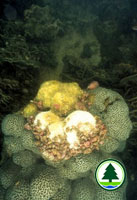
This species of snail feeds on coral tissues, leaving behind the dead skeleton. Overproduction of this snail can cause an entire reef to be killed off, like the Ningaloo reef in Western Australia. |
Sea Slugs
The evolutionary trend in sea slugs have been toward a reduction or even complete loss of their protective shells. They include nudibranchs, sea hares, side-gilled slugs and sap-sucking slugs.
All species of sea slugs are simultaneous hermaphrodites. Each individual has both male and female gonads and can produce both sperms and eggs. The genitals, found on the right side of the animal, are highly modified to prevent self-fertilization. When mating, the animals will pair up, facing in opposite directions and touching genitals to allow simultaneous passing of sperms between individuals. Their eggs are laid on hard surface, often in distinctive spiral egg ribbons. Individual eggs are held to each other and to the substratum by a mucus sheath.
|
Nudibranchs |
|
Nudibranchs mean "naked gills", in which most of the animals have the gills or branchial plumes outside the body. They are shell-less and therefore need other means of defence.
Bright colouration of nudibranchs can warn predators that they are noxious or even toxic. The colour is often acquired from their preys. Chemical weapons are another choice of defence. Most of them have deterrent chemicals which make them foul tasting or poisonous. The chemicals are either made by the animals or absorbed and retained from their toxic preys.
Some species of nudibranchs can borrow the weapons of others and modify them for their own use. Aeolid nudibranchs feed on sea anemones and hydroids. They managed to transfer the undigested stinging cells from the prey to the tips of their tentacle-like cerata for defence.
Most nudibranchs are highly selective carnivores, with each species specificing feeding on a group of prey, such as sponges, hydroids, sea anemones, sea squirts or other sea slugs. Nudibranchs have a short life cycle, lasting from several weeks to a year.
Of nearly 2000 species of nudibranchs known from the Indo-Pacific, around 200 species have been recorded from Hong Kong.
|
||
|
As shown in the photos, this recently described nudibranch shows great variation in the black lines and the spots between individuals. The gills and rhinophores (antennas) are normally orange and there is always a black spot or line between the rhinophores. This species is only known from Hong Kong, Philippines, Indonesia and Borneo. |
||
|
||
|
Juveniles of this nudibranch often have orange rhinophores and gills, while those of the adults are green. This species has a distinctive habit of raising the front of the head and vibrating the gills as it moves. |
||
|
||
|
This species can grow to 5 cm in length. It is an active species and feeds mainly on sponges. In Hong Kong, it primarily occurs in Double Haven and Tolo Channel. |
||
|
|
||
|
This species is widely distributed and can be found under rocks and stones in almost all months of the year. It is active and feeds on ascidians. |
||
|
|
||
|
This nudibranch was observed on the stony coral Tubastrea sp. |
||
|
||
|
Colour of this species varies from brown and orange to the more characteristic black with pink edged-skirt. It feeds on sponges. Groups of this species were observed laying eggs in March. |
||
|
|
||
|
This species has not been recorded in Hong Kong previously. |
||
|
||
|
||
|
||
|
|
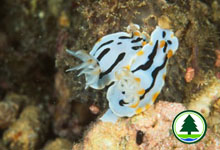
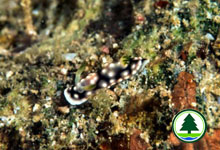
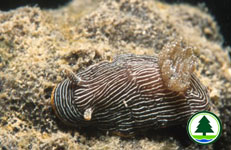
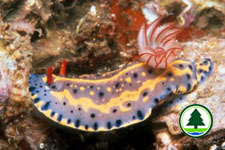
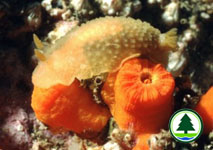
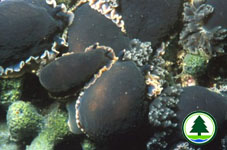
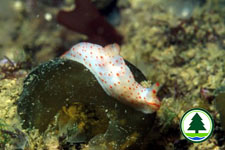
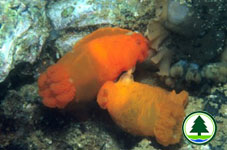
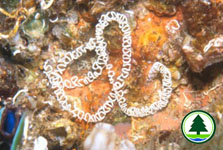
The plume-like gill of side-gilled slugs is usually located on the right side of the body, between the mantle and foot. Most of them reside in shallow sublittoral area, but a few species may occur in depth more than 30m. They all are carnivorous, feeding mainly on sponges, tunicates, and other sessile invertebrates. The chemical weapon they used is an acid secretion that can cause a burning sensation to skin.
Sap-sucking Slugs
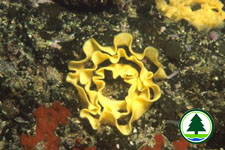
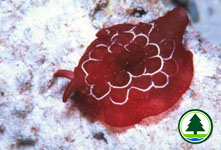
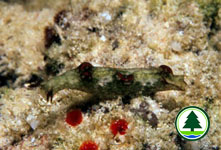
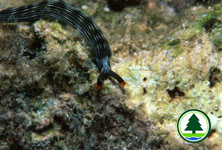
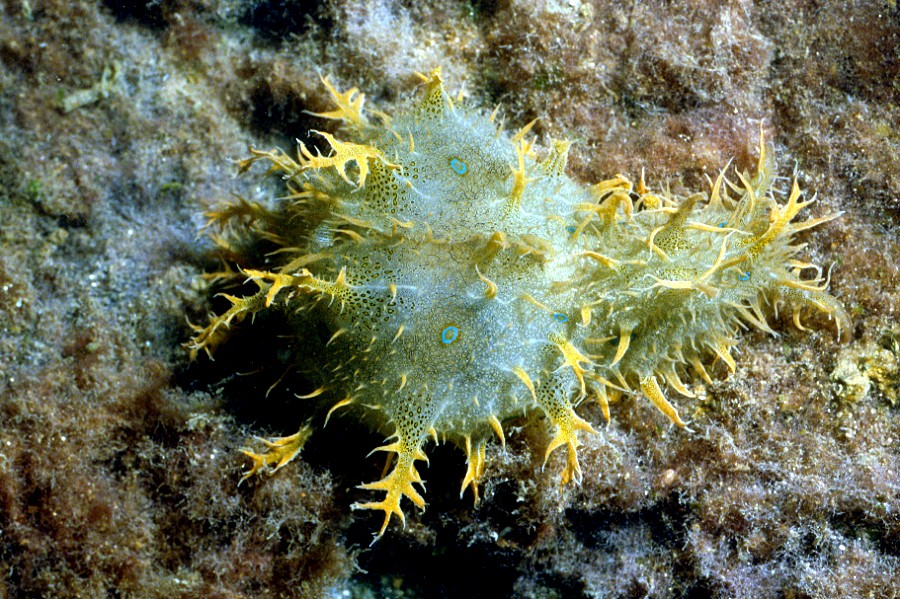
Like the nudibranchs, the body form of sap-sucking slugs is highly specialized and variable. Their oral tentacles are very small or absent, with the gills usually missing. The most obvious external feature are the rolled rhinopores. Sap-sucking slugs mainly feed on green algae. They have a highly-developed radula and mouth part that enable them to pierce the algal cells and suck out the content.
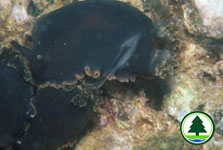
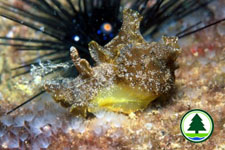
As the name suggested, sea hares have a rabbit-like appearance. Their shells may be external, internal or absent. They can grow very large and are the largest sea slugs on the reef. All sea hares are herbivorous, feeding on algae and sea grasses. They usually inhabit silty weedy area in shallow waters.
|
|
Clams Oysters (Class Bivalvia) |
|
Bivalves are molluscs with two shells (or valves), held closed by two strong muscles and hinged along one edge. Their muscular foot is compressed and highly modified. In sand-dwelling bivalves, the foot is adapted for burrowing; in sessile bivalves that attach to substratum, the foot is reduced.
|
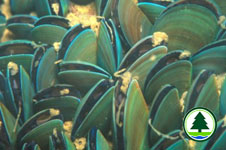
Many bivalves are filter-feeders, obtaining food particles from their surrounding waters. When seawater passes over the gills for gaseous exchange, food particles are captured and passed to the mouth by cilia.
|
||
| It occurs in sandy and muddy substrate. | ||
|
||
| There are small eyes around the margins of the mantle. | ||
|
Octopus, Cuttlefish & Squids (Class Cephalopoda) |
|
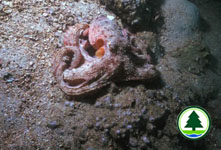
Octopus, squid and cuttlefish are all cephalopods. They are generally adapted for swimming and have the most advanced nervous system of all invertebrates. Their eyes can accurately register shapes, textures and colours. They can find and capture preys by their arms/tentacles.
Cephalopods communicate with each other by movements of the arms and bodies and also through their colour changes. These colour changes, which can occur within seconds, are caused by special cells in the skin called chromatophores that contain granules of pigments, as well as the tiny muscle cells that surround the chromatophores.
Cuttlefish and squids have 8 arms and 2 tentacles while octopus have 8 arms but no tentacles. When stressed, they all are able to release a quantity of ink-like substance from a muscular siphon. The siphon also provides jet locomotion when water is forcefully expelled through it from the mantle cavity. Streamlined squids can swim faster than any other invertebrates, up to 40 kilometers per hour.
|
||
|
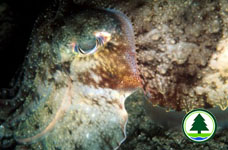
Most cuttlefish are able to alter their colour and texture and thus they should not be considered reliable features for identification.
|
||
|
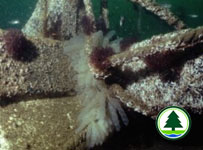
Each egg capsule contains several developing squids.
|
||
|
||
|
||
|
| Back | Back to Top |
