The objectives of the branch are:
- To conserve the natural environment through the identification, designation and management of suitable areas as country parks, special areas, geopark, marine parks and marine reserves;
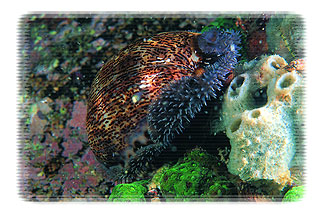
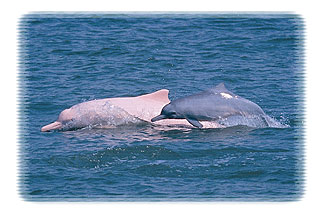
- To conserve important marine and terrestrial fauna and flora, such as the Chinese white dolphins, finless porpoises, coral communities, birds, mammals, butterflies and dragonflies;
- To promote nature appreciation through publicity and educational activities and the provision of suitable facilities.
|
 |
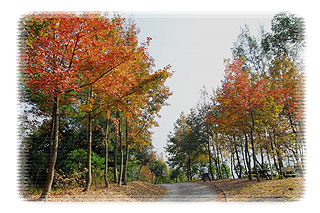
To conserve the countryside, by March 2010, 44,004 hectares (about 40 % of Hong Kong's total land area) had been designated as country parks and special areas. The Department continued to manage all 24 country parks and 17 special areas for conservation, recreation, education and tourism. Hiking trails, nature trails, barbecue and picnic sites, camp sites and visitor centres were provided in the country parks, drawing some 13.4 million visitors in 2009-10.
The Department also continued to manage marine parks and marine reserves for conservation, recreation, education and scientific studies. There are currently four marine parks and one marine reserve, covering 2,430 hectares. They comprise scenic coastal areas, seascapes and important marine habitats with an abundance of interesting marine fauna and flora, providing ideal opportunities for diving, snorkelling, canoeing and underwater photography. Some 209,400 visitors to marine parks were recorded in 2009-10.
During the year, 34 hill fires occurred over an area of 275 hectares with 23,000 trees damaged within or adjacent to country parks. The number of hill fires was slightly less than that of the past two years. However, there were a few major fires in Tai Lam Country Park and Pat Sin Leng Country Park. Rehabilitation planting programme in areas damaged by hill fires and various fire prevention measures have been implemented.
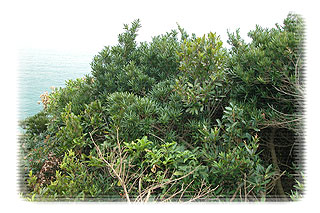
Some 700,000 seedlings were planted in 2009-10. To enrich local plant diversity, the Department continued to produce and plant seedlings of native tree species. Major native species planted included Aquilaria sinensis, Castanopsis fissa, Celtis sinensis, Gordonia axillaris, Liquidambar formosana, Machilus chekiangensis, Machilus pauhoi and Schima superba. Among all seedlings planted, 66% were native species.
Seedlings of uncommon species like Aphananthe cuspidata, various Camellia species, Keteleeria fortunei, Nauclea officinalis and Pyrus calleryana as well as seedlings of tree species that were not readily available in the market, such as Machilus chekiangensis and Machilus pauhoi, were produced in the Tai Tong Nursery, Yuen Long for planting in country parks.
 |
Several decades ago, trees mainly of exotic species were planted in the country park plantation schemes. The key planting objectives were to restore vegetation to the badlands, cover the eroded scars with trees, prevent further soil erosion and rejuvenate soil vitality. To achieve these objectives, fast growing, hardy and exotic pioneer species were adopted in the plantation scheme. The most commonly used species were Taiwan Acacia (Acacia confusa), Brisbane Box (Lophostemon confertus) and Slash Pine (Pinus elliottii). Other fast growing species, such as Horsetail Tree (Casuarina equisetifolia), Eucalyptus trees (Eucalyptus species), Paper-bark Tree (Melaleuca quinquenervia), Earleaf Acacia (Acacia auriculiformis) and Acacia mangium etc were commonly planted as well. At present, these exotic plantations are widely established in country parks.
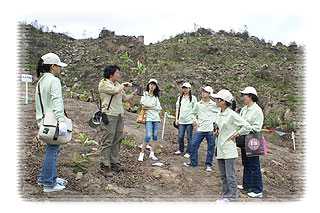
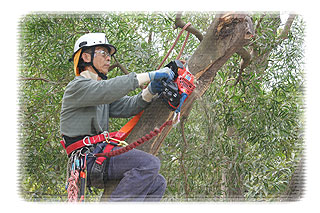
However, many of the existing plantations in country parks are facing problems such as aging, withering and overgrowing. Trees species found within the plantations are monotonous comprising of mainly exotic species, making it difficult for them to fully satisfy the need of native wildlife for food and shelters, thus considered unattractive to local wildlife. In addition, the trees aged simultaneously in the plantations, hindering the sustainable development of the woodland habitats. The dense canopies of the trees, as a result of the rapid growth, have blocked the natural propagation and growth of native trees. The landscape of the plantations also appears to be monotonous. The ecological value of the plantations, which are in lack of vitality, could hardly be further enhanced. Therefore, the Department launched the Country Park Plantation Enhancement Scheme (the Scheme) at the end of 2009 to enrich the overall value of country park plantations. The objectives of the Scheme are as follow:
(i) |
To improve the ecological habitat of the plantation areas; |
(ii) |
To increase the biodiversity of both local flora and fauna; |
(iii) |
To allow healthy growth and sustainable development of the woodlands; |
(iv) |
To provide seeds of native trees; |
(v) |
To enhance the landscape of the country park plantation areas, and |
(vi) |
To reduce the chance of pest outbreaks. |
|
|
During the dry season of 2009, 21 sites were engaged under the Scheme and about 10,000 exotic trees in poor conditions were removed. Suitable native tree seedlings were in-planted in the plantation areas in the following planting season of 2010. It is expected that the newly-planted seedlings would gradually establish in the thinned woodland, and eventually replace all the exotic species in the long run. The Department will continue to carry out the Scheme in the coming years to improve all plantations in country parks systematically with an aim to enhance overall ecological value of the country parks.
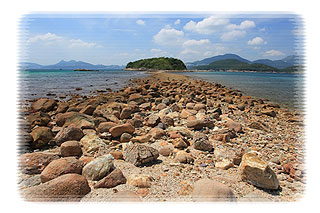
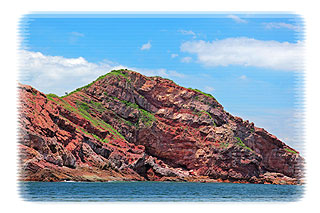
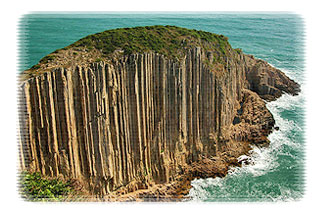
A geopark is a unique natural area with special geological significance, as well as natural and cultural landscapes, serving the three objectives of conservation, education and sustainable development. To protect the rich geological resources of high academic research, tourism and scenic value in Hong Kong, the Department has set up the Hong Kong National Geopark which was officially opened on 3 November 2009 by the Chief Executive, Mr Donald Tsang, together with other distinguished guests, including the Vice-Minister of the Ministry of Land and Resources, Mr Wang Min. On the same occasion, it was also announced that Hong Kong National Geopark had established a sister relationship with four overseas and Mainland global geoparks: Yandangshan Geopark of China, Itoigawa Geopark of Japan, English Riviera Geopark of the United Kingdom and Kanawinka Geopark of Australia. The sister relationship is intended to help strengthen the network of information exchange and publicity among geoparks.
 |
Hong Kong National Geopark is made up of eight Geo-Areas distributed across the Sai Kung Volcanic Rock Region and Northeast New Territories Sedimentary Rock Region, covering a total area of 49.85 square kilometres. The Geo-Areas are High Island, Sharp Island, the Ung Kong Group, the Ninepin Group, Tung Ping Chau, Double Haven, Tolo Channel and Port Island-Bluff Head.
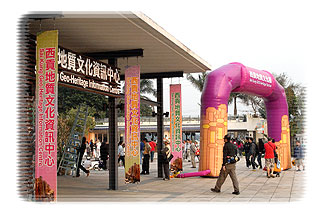
To introduce the Geopark to the public, a visitor centre and three geoheritage centres were set up: the Geopark Visitor Centre in Tsiu Hang, Sai Kung, the Sai Kung Geoheritage Information Centre, the Tai Po Geoheritage Centre and the Lai Chi Wo Geoheritage Centre. These centres provide an overview of the Hong Kong geological environment and information about the culture, history and diverse natural environment of the local areas with an aim to promote greater interest in earth sciences and raise the awareness of the importance of preserving our geological heritage.
To enhance visitors' experience at the Geopark, eight land-based tour routes and two boat tour routes in different Geo-Areas have been set up. The routes were planned and designed according to the specific characteristics and geological features of each scenic area.
With a view to fostering the public's understanding and appreciation of landforms in Hong Kong, a series of publications, including a set of geopark field guides, a photo album and a number of children's books, were launched to help readers learn more about and protect the magnificent rock features of Hong Kong.
With the increasing popularity of marine parks, a number of measures were taken to address problems arising from the increase in visitors. These included increased patrols, with volunteers assigned to advise visitors of codes to observe during their visits, the arrangement of guided activities and the publication of educational materials. Law enforcement action was also taken to combat illegal activities.
Nature Appreciation Activities
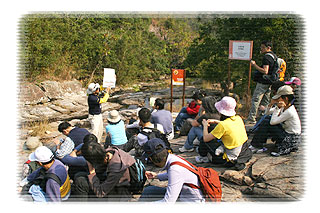
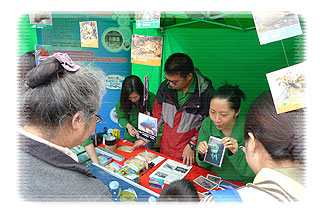
The Department continued to produce a series of publications and conduct numerous conservation activities for nearly 280,000 local students, teachers and nature lovers. In 2009-10, the Department carried out a brand new programme "Nature In Touch" to strengthen the educational resources on nature conservation in country parks. The programme included a series of educational activities for students to learn about subjects related to environmental science and sustainable development in the syllabus of liberal studies and to engage in "Other Learning Experience", which is required in the New Senior Secondary Curriculum, in country parks. "Nature In Touch" aimed at promoting a better understanding of country parks, biodiversity, plant conservation and geological characteristics in Hong Kong, thus enhancing public awareness of protecting the natural environment. It covered five parts, namely Enjoy Hiking, Country Park Volunteer Scheme, Field Experience, Geoconservation and Field Study.
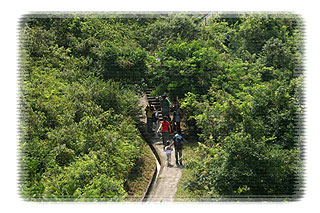
Enjoy Hiking comprised "CAS Hiking Safety Promotion Day", "Great Outdoor Hong Kong!" and "Country Parks Geo-wonder Hike". This wide-variety of activities served to introduce the fun of hiking to public, and to equip public members with safety knowledge in mountaineering activities. Co-organised with Hong Kong Tourism Board, "Great Outdoor Hong Kong!" highlighted the various facets of MacLehose Trail. The route was the same as that of the annual charity walking event Oxfam Trailwalker. In addition, "Country Parks Geo-wonder Hike" was held in Sai Kung and Double Haven. Interpretation was provided in selected sightseeing spots to introduce to the participants the geological attractions and features of Hong Kong National Geopark. These three activities attracted about 14,600 participants.
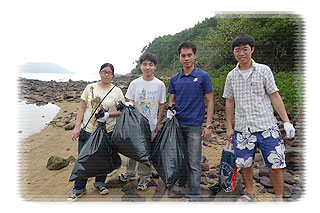 |
Country Park Volunteer Scheme was launched by the Department in January 2010, aiming to arouse public awareness of nature conservation through public involvement in country park conservation and education. The scheme started to recruit volunteers online in January 2010 and received about 550 applications from retirees, working adults to students. To enrich public knowledge in ecology and nature management, so as to facilitate conservation work at country parks, the Department provided all volunteers with trainings and practices.
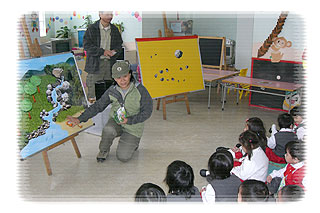
Field Experience comprised a number of educational activities such as Country Park Orienteering, Nature Appreciation – Practice and Kindergarten Visit. The Department also organised the "Country Parks Reporter Inter-School Competition" to offer students the opportunities to take part and gain insight in various jobs on site at country parks. Throughout the process, students were inspired to reflect on the challenges in country park management, as well as the strategies in nature conservation. Field Experience drew 117 schools and 6,200 students to participate.
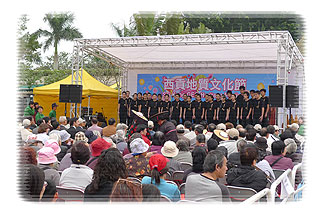
Geoconservation covered four series of activities: "Hong Kong National Geopark Geo-tour", "Rock Academy", "Sai Kung Geo-heritage Festival" and "North District Flowers, Birds, Insects and Fishes Exhibition" with some 82,000 participants. These activities introduced to public and students the unique geological features of Hong Kong.
Last but not least, "Field Study" included "Seminar on Field Trip Routes of Hong Kong Geopark", public seminars and a number of public guided-tours. The activities all served to raise public awareness of geo-conservation and nature appreciation.
Marine Conservation Education Programme
The Department organised a variety of marine conservation education activities targeting various sectors of the community. During the year, 119 public eco-tours, 7 public seminars, 3 beach clean-up activities, 28 school lectures, 63 exhibitions and 39 other kinds of educational activities were held, benefiting over 74,000 participants.
Park wardens patrol country parks and special areas on a regular basis to provide visitor services and to enforce the Country Parks Ordinance and related legislation. In 2009-10, 888 offenders were prosecuted or given a fixed penalty notice with fines totaling $817,010. Among these, a total of 391 offenders were given a fixed penalty notice for littering or spitting. Statistics are at Appendix 12. Park wardens and nature wardens also conducted frequent special operations in the country parks, such as searching for illegal animal traps, visiting villages for the promotion of fire prevention, enforcing prohibition of feeding wild animals and assisting the Police in search-and-rescue exercises. Regular joint operations with the Police were undertaken to combat crimes, such as illegal felling of Buddhist Pines and Incense Trees.
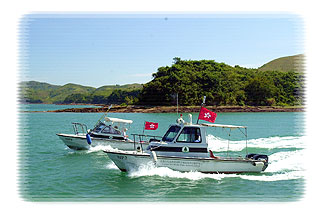
In our marine parks and reserve, wardens patrol on a daily basis, paying special attention to any illegal fishing activities and other offences. Close liaison is also maintained with the Marine Police and the Fisheries Authority of Shenzhen to combat illegal fishing by Mainland fishermen in marine parks. Wardens give advice or warnings to visitors and institute prosecutions when necessary. In 2009-10, 62 prosecutions were instituted with fines totaling $49,850.
Reef Check
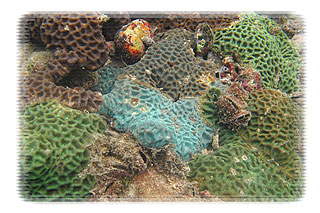
The Department coordinated the annual Reef Check in collaboration with the Reef Check Foundation. During the year, 33 coral sites were surveyed with the assistance of over 410 volunteer divers. Twenty-three of these coral sites recorded high coral cover (i.e. more than 50%) and the growth of corals at all sites was stable. Results of the Reef Check were publicised to enhance public awareness of the current status of our marine environment and to seek the public's cooperation in protecting our precious marine resources. The findings also provided the Department with important information on the health status of corals so that appropriate action could be taken to protect them.
Conservation of Corals
Specially-designed marker buoys were installed at Ung Kong Wan, Sharp Island and Port Island for better protection of corals from anchoring damage. Regular sea patrols and underwater ecological surveys were also conducted to monitor the effectiveness of the coral marker buoys in these areas. The results to date are encouraging. There has been an overall increase in live coral cover in the marker buoy area and damaged corals have shown signs of recovery.
Conservation of Marine Mammals
There are at least 2,500 dolphins living in the Pearl River Estuary including about 1,300-1,500 dolphins living in the eastern part of the Pearl River Estuary and Hong Kong waters. About 200 dolphins of this population live in the western waters of Hong Kong around Lantau Island, Tuen Mun, Sha Chau and Lung Kwu Chau. The Department has been implementing a Conservation Programme for the Chinese white dolphin since 2000. Tasks include habitat protection and management, long-term monitoring of the dolphin population, investigation of dolphin stranding, promotion of public awareness of dolphin conservation, and liaison with the Guangdong authorities to exchange information on the conservation of the species. Population data analysis indicated that the abundance of dolphins in Hong Kong waters has stayed generally stable over the years.
Every reported dolphin stranding in Hong Kong was investigated by the Department in collaboration with the Ocean Park Conservation Foundation. Tissue samples from the carcasses were collected for further studies. The Department continued to hold exhibitions and seminars as well as to distribute posters and leaflets to promote conservation awareness, and publicise the code of conduct on dolphin watching and the dolphin stranding hotline. Through these efforts, the public gradually deepened their understanding of marine mammals.
The Department regularly provides comments and advice on development proposals and projects as well as Environmental Impact Assessment studies to ensure that potential impacts of development projects on the marine environment and ecology would be adequately addressed, evaluated and minimised through effective mitigation.
|