|
Hong Kong's topography and subtropical climate provide a wide range of habitats that support a rich variety of flora and fauna. Scenically, it has a great deal to offer – a landscape rising from sandy beaches and rocky foreshores to a height of almost 1,000 metres, with woodlands and hilly areas covered by open grassland, as well as a variety of scenic vistas rarely seen in such a small place.
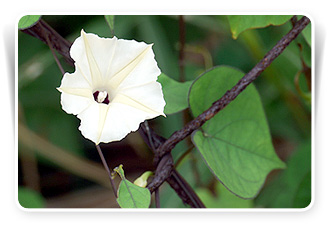
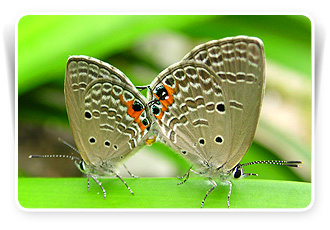
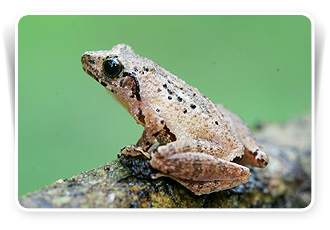
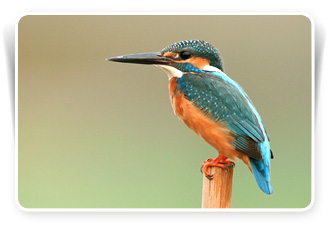
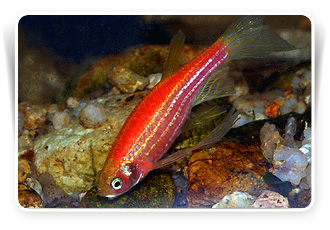
In Hong Kong, there are more than 3,100 species of vascular plants, of which about 2,100 are native; 56 species of mammals; 505 species of birds; 185 species of freshwater fish; 83 species of reptiles and 24 amphibian species. Insect diversity is also very high with some 240 species of butterflies and 116 species of dragonflies.
Under the New Nature Conservation Policy announced in November 2004, 12 Priority Sites have been identified for enhanced conservation through Public-Private Partnership (PPP) and Management Agreements (MA) with landowners. The Department is responsible for monitoring PPP and MA projects selected for implementation by the private sector or non-governmental organisations in these sites.
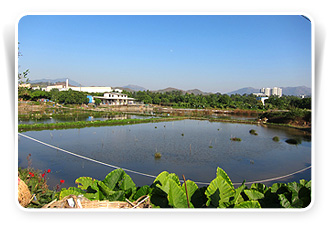
As at March 2011, there were two MA projects at the priority sites in Long Valley and Fung Yuen, covering more than 15 hectares of private land. The increase in the number and diversity of birds and butterflies suggested that the MA scheme was effective in enhancing the conservation value of the sites. In addition to the direct benefit to biodiversity, the projects also raised the conservation awareness of the public and local villagers.
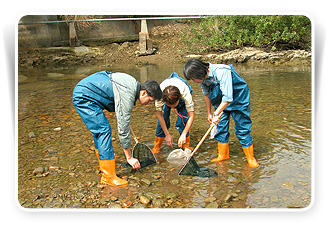
The Department has been conducting a territory-wide ecological survey programme since 2002 with a view to maintaining and updating an ecological database for Hong Kong. The survey programme covers all major habitats of high conservation value in Hong Kong, including the location, status and composition of fung shui woods, as well as the distribution and abundance of selected animal groups. As at March 2011, more than 82,000 records of over 4,000 species of plants and animals had been collected, verified, and stored in the database.
The survey findings confirmed that Hong Kong has a rich biodiversity, including species new to Hong Kong and even new to science. The findings further indicated that our protected areas encompass a very significant portion of this biodiversity. For the species groups surveyed and analysed, over 98% of the terrestrial and freshwater species that are regularly seen in Hong Kong have representative population(s) inside our protected areas.
During the year, the Department continued to boost public interest in local biodiversity and arouse public awareness of nature conservation through its online database on representative species and habitats at Hong Kong Biodiversity Online and the Hong Kong Live Eco-map. The Department also developed a central database using the Geographical Information System which incorporated survey data and ecological information available from other sources.
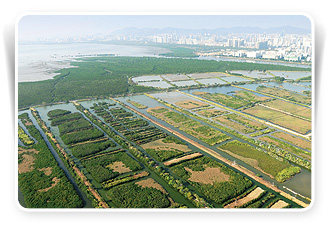
About 1,500 hectares of wetland in the Mai Po and Inner Deep Bay area was listed as a Ramsar Site in 1995. The Mai Po Inner Deep Bay Ramsar Site is located along the major migratory bird flyway “East Asian - Australasian Flyway” which is an important stopover site and habitat, supporting over 150 species of migratory and local waterbird species.
Since August 2001, the Department has implemented a baseline ecological monitoring programme for the Ramsar Site. This long-term monitoring programme aims to collect ecological baseline information on the benthic communities and the extent of wetland habitats at the Ramsar Site.
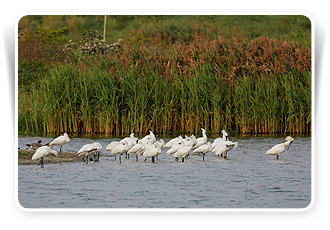
Commissioned by the Department, the Hong Kong Bird Watching Society has been carrying out a monthly waterbird monitoring programme for the Deep Bay area since 1997. From October 2010 to March 2011, the peak winter count of waterbirds at the Ramsar Site was about 76,600, including some 30,600 ducks and grebes, some 23,100 shorebirds, some 9,470 gulls and terns, some 10,000 cormorants, some 3,100 egrets and herons, and some 330 rails and coots.
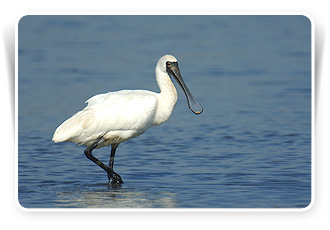
The Black-faced Spoonbill is a globally endangered species that can only be found in the East Asia region. In 2010-11 winter, the global population survey recorded 1,848 individuals. The highest count for wintering population in the Deep Bay area, which was recorded in January 2011, was 441 individuals, i.e. about 24% of them made the Inner Deep Bay area their winter or stop-over migration site. The area has the second largest number of wintering Black-faced Spoonbills in the world.
A conservation plan for Black-faced Spoonbills has been in place since 2001 which aims at maintaining the Mai Po Inner Deep Bay Ramsar Site in favourable conditions for the wintering Black-faced Spoonbills in Hong Kong. The plan also makes recommendations on measures for species and habitat protection and management, monitoring and research, education and training as well as regional cooperation.
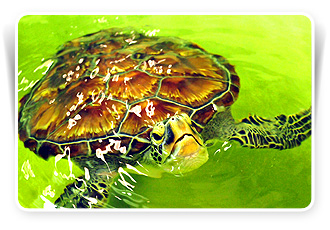 |
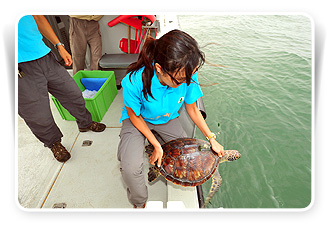
Green Turtle (Chelonia mydas) is the only sea turtle species that regularly breeds in Hong Kong. Various conservation measures have been put in place, including the designation of Sham Wan beach on Lamma Island as a restricted area during the nesting period from June to October each year, regular patrols and public education about sea turtle conservation in Hong Kong. In 2010, two Green Turtles received from the public were subsequently released after health assessment by the Department in August and November 2010. With a view to understanding the movement of Green Turtles and locating their foraging grounds in South China Sea, satellite transmitters were deployed on the two turtles. Satellite tracking revealed that these two Green Turtles arrived at their respective foraging grounds in the Pratas Islands and Shanwei.
The Protection of Endangered Species of Animals and Plants Ordinance (Cap 586) is the local legislation which gives effect to the Convention on International Trade in Endangered Species of Wild Fauna and Flora (CITES). It strictly regulates the trade in endangered species.
Efforts in combating illegal trade in endangered species continued. During the year, 322 seizures were made, including a shipment of 786 live pig-nosed turtles from Indonesia, 1,000 live arapaima from Peru, 52 kg of pangolin scale from Côte d'Ivoire and 1,550 kg of ivory from Tanzania.
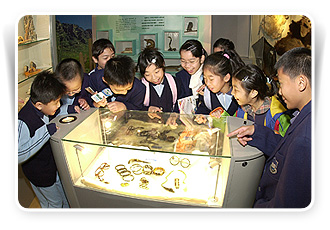 |
The Department continued its educational and promotional efforts to raise public awareness of the need to protect endangered species, such as organising visits to the Department's Endangered Species Resource Centre, conducting talks in schools and roving exhibitions at public venues, distributing posters and leaflets as well as arranging displays at the airport and border control points. Co-organised with a non-governmental organisation, a professional chapter and a local newspaper, the "Endangered Species Protection Wallpaper Design Competition" received good response with more than 2,000 entries. Regarding the joint education and publicity efforts between the Hong Kong Special Administrative Region and Guangdong Province, a joint publicity event at control points as well as a training course for CITES enforcement officials were organised.
 |
The Genetically Modified Organisms (Documentation for Import and Export) Regulation (Cap 607A), which is the subsidiary legislation to the Genetically Modified Organisms (Control of Release) Ordinance (Cap 607), was passed by the Legislative Council on November 10, 2010. The Regulation provides detailed documentation requirements for importing and exporting shipments containing genetically modified organisms (GMOs).
The Ordinance and the Regulation have come into effect since March 1, 2011. Under the Ordinance, prior approval has to be sought from the Director of Agriculture, Fisheries and Conservation before a GMO could be released or imported into Hong Kong that may be released into the local environment. In addition, shipments containing GMOs, when being imported or exported, have to be accompanied with prescribed documents to enable easy identification of the GMOs and to provide the contact points for further information.
The Ordinance also provides a six-month transitional period from March 1 to August 31, 2011 with respect to the maintenance of released GMOs. During the transitional period, it is not an offence for a person who knowingly maintains the life of a GMO that is released into the environment before the commencement date. However, the person must, before that period expires, inform the Director of the maintenance by written notice or submit a GMO approval application in respect of the released GMO.
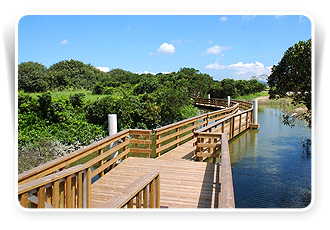 |
Opened in May 2006, the Hong Kong Wetland Park is a landmark in wetland conservation, with a mission to promote eco-tourism in Hong Kong and foster public awareness of the values of wetlands. The Park combines the natural beauty of 60 hectares of re-created wetland with a visitor centre of over 10,000 square metres showcasing sophisticated exhibits on wetlands. During the year, the Park attracted about 440,000 visitors.
The Department is responsible for the management of the Park, with respect to daily operation, education and community services, exhibit maintenance, habitat management and marketing promotion.
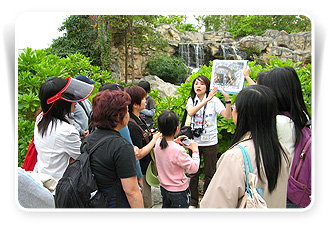
In 2010-11, the Park organised a wide range of activities for some 180,000 visitors of all ages including guided tours, seminars, wildlife watching classes, contests, dramas, art workshops and thematic events.
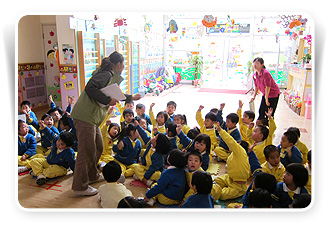 |
The Park offered guided visit programmes to students from kindergartens to senior secondary schools. The new programme "Learning at Wetlands" was in full swing in the year to meet the demand under the New Senior Secondary (NSS) Academic Structure. In 2010-11, the Park conducted over 800 guided tours for more than 20,000 students. In addition, the Park organised exhibitions, talks, teacher's workshops and partnership programmes to support wetland education in schools.
For the general public, the Park organised 11 public lectures for more than 1,100 visitors during the year. Various thematic events were organised to tie in with public holidays and major festivals, such as the Easter Family Excursion, Insect Chorus, Lotus Bloom, Bird Watching Festival and World Wetlands Day Celebrations.
The Park continued to work with different sectors to promote the awareness of wetland conservation throughout the community. The Hong Kong Wetland Park Volunteer Scheme recruited more than 1,400 volunteers in 2010-11. They assisted in the operation of the visitor centre and habitat management, and offered guided tours for visitors. The Park also established partnership programmes with corporations and non-government organisations to draw expertise and resources into the force of wetland conservation.
The Park plays an important role in promoting wetland conservation and education in the Asia Pacific region. Being a key player of the Wetland Link International – Asia (WLI-Asia) network, the Park continues to maintain the WLI-Asia Website to provide the most up-to-date information and to facilitate communication among wetland centres.
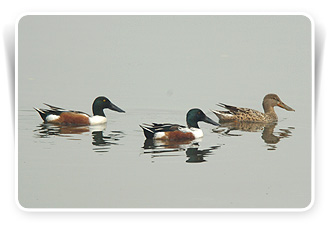 |
Since 2003, the Department has been conducting habitat management at the Wetland Reserve with a view to enhancing its ecological functions. The species richness of birds recorded has since increased, and the cumulative number of bird species recorded has exceeded 235. Waterbirds or birds dependent on wetlands make up approximately 46% of all species recorded. In addition to birds, ecological surveys conducted at the Reserve have recorded a variety of other species especially the wetland indicators – dragonflies, amphibians and reptiles. The cumulative numbers of dragonfly, amphibian and reptile species recorded at the Reserve are 49, 9 and 23 respectively. This shows that, with proper site design and management, the objectives of nature conservation, education and tourism can co-exist.
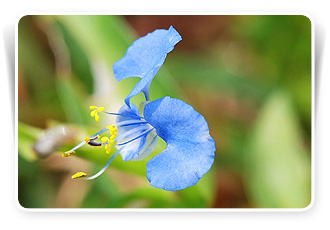 |
The Department manages the Hong Kong Herbarium which is responsible for the systematic collection, identification and maintenance of plant specimens of Hong Kong's flora. During the year, the specimen collection of the Herbarium exceeded 41,000, more than 290 of which are type specimens, making the Herbarium regionally important.
The Hong Kong Herbarium collaborated with the South China Botanical Garden in compiling the Flora of Hong Kong. It is a definitive technical reference aiming at recording all known plant species in Hong Kong, and is the first flora book about plants of South China written in English and fully illustrated with botanical drawings and colour photographs. Volumes 1, 2 and 3 of the Flora of Hong Kong were published in 2007 - 2009. They have been well received by local and overseas academics as well as plant workers. Volume 4 of the Flora of Hong Kong, covering 40 families, 290 genera and 713 species and varieties of plants was published in mid 2010.
In addition to being a resource centre for plant workers, the Herbarium aims to promote public awareness of local flora through organising guided visits and publishing educational materials.
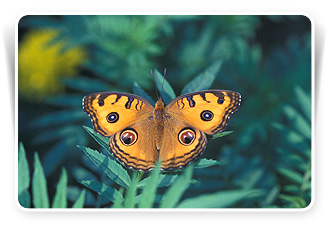 |
Sites of Special Scientific Interest (SSSI) may be land-based or aquatic sites, which are of special scientific interest because of their flora, fauna, geographical or geological features. During the year, the Department continued to patrol and monitor the conditions and scientific values of all SSSIs. Where warranted, the Department also carried out appropriate habitat management work at some SSSIs to maintain or enhance their scientific value. For instance, Mikania control was conducted at A Chau SSSI to improve the conditions of the trees there so as to provide a suitable site for egrets and herons to nest. Butterfly host plants were planted at Fung Yuen Valley SSSI to enhance the butterfly habitat. The Department also continued to review the status of SSSIs and identify new sites suitable for SSSI listing or make proposals for de-listing those sites no longer deserving the SSSI status due to changes in circumstances over time after their listing.
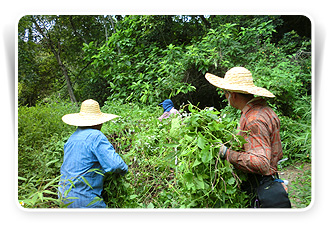 |
Mikania (Mikania micrantha) is an exotic climber which grows rapidly in open and disturbed areas, such as roadsides and derelict land. The overgrowth of Mikania causes damage to other plants by cutting out light and smothering them. Since Mikania seldom grows in the shade, it does not result in any adverse impact on established woodlands with large trees and a close canopy.
To prevent the proliferation of Mikania in sites with conservation value, the Department continued to clear the plant when it was found in country parks, special areas and SSSIs. Besides mechanical weeding, habitat management control was applied on a trial basis. The department also conducted field study to explore the feasibility of controlling Mikania with biological agents.
In addition, the Department prepared the Nature Conservation Practice Note "Clearing Mikania" which provides technical guidance to relevant government departments and landscape contractors responsible for the clearance of Mikania. The Department has also set up a website on Mikania.
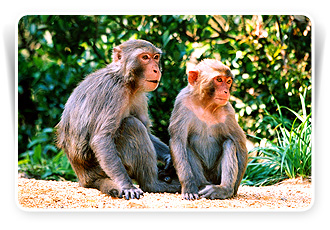 |
The wild monkey population in Hong Kong has been increasing for the past years and has caused public concern. To control the population increase in the long term, the Department has stepped up the field trial of contraceptive treatment. In 2010-11, the Department carried out such treatment on 499 monkeys. The Department also strengthened the enforcement of feeding ban in specific country parks to minimise monkey nuisance to visitors. During the year, a total of 91 country park visitors were prosecuted for unauthorised feeding of wild monkeys. With the implementation of both the feeding ban and the contraceptive programme, it is observed that there is a decreasing trend in the population of wild monkeys as well as the number of wild monkey nuisance cases. |