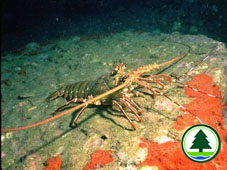
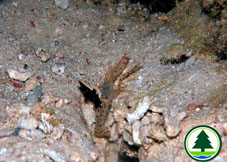
Chinese Spiny Lobster Panulirus stimpsoni (Palinuridae)
This species is characterized by the white strips on the pereiopods (legs). It is endemic in Hong Kong waters and appears to be the most abundant spiny lobster in Chinese Mainland.
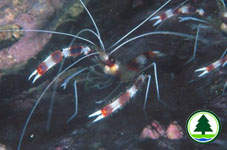
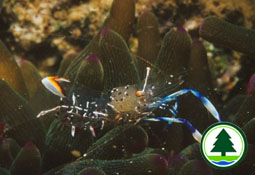
This well-known cleaner shrimp is generally found in pairs, with the female being larger than the male.
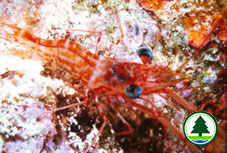
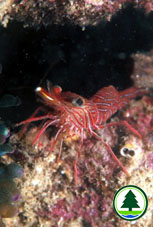
This hingebeak shrimp is a nocturnal animal, often remaining in or close to crevices and caves during the day. Large eyes and the sharp angle along the body characterize the family. The large pincers in this individual distinguish it as a male.
This beautiful shrimp is commonly found in the sea-anemone Entacmea uadricolor. It was first described from specimens caught in Hong Kong waters. The most obvious feature of this species is the white V-shape on the third abdomen segment.
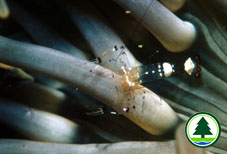
This small shrimp associates with sea anemones. It is distinguished by the pattern of white spots and the five black and yellow spots on the tail. It has not previously been recorded from Hong Kong.
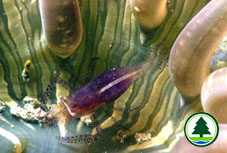
This anemone-associated shrimp is characterized by the red colour on the body and the purple and white patterns on legs, pincers and tail. This species was firstly described from a specimen collected at Lung Ha Wan, Hong Kong.
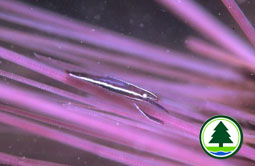
This distinctive commensal shrimp is easily recognised by the flattened body and the dark body colour with three thin white stripes. It only inhabits the spines of sea urchins.
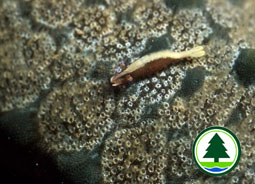
This tiny shrimp lives on a starfish, and can also be found on sea cucumbers.
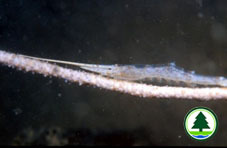
This "long-nose" shrimp lives together with a gorgonian.
Gorgonian Shrimp, Tozeuma sp.
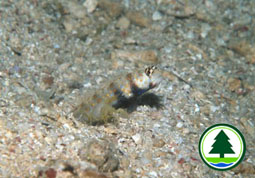
Alpheus sp. and goby
This shrimp lives with the goby Amblyeleotris guttata. It excavates continuously to maintain the living burrow in exchange for a "watchdog" service provided by the goby.
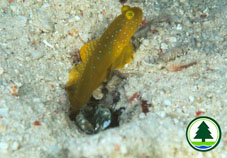
The watch dog of this shrimp is goby, Cryptocentrus sp.
Alpheus sp. and goby
Alpheus sp.
The partner of this shrimp is goby, Lotilia graciliosa.