Report of Stranding
|
What should I do if I find a stranded Indo-Pacific finless porpoise? What types of information can be obtained from a dead Indo-Pacific finless porpoise? How many stranded cetaceans were found in Hong Kong in the past ten years? |
|
What should I do if I find a stranded Indo-Pacific finless porpoise?
Please call 1823 and inform Agriculture, Fisheries and Conservation Department for investigation. The following information would help our investigation:
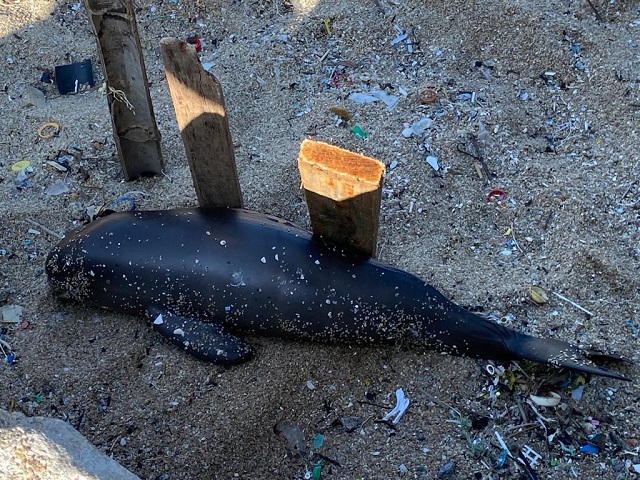
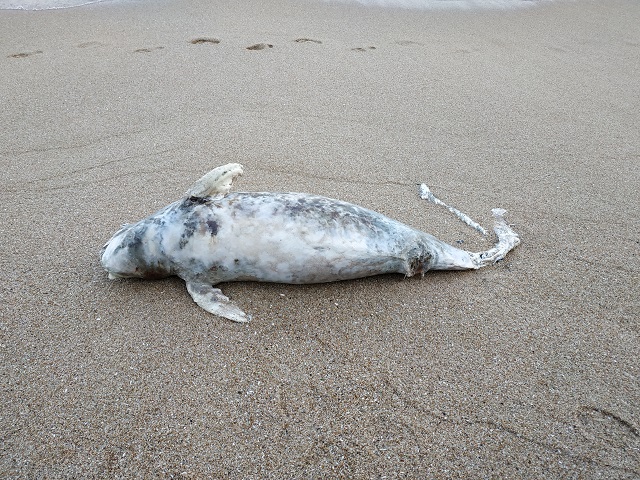
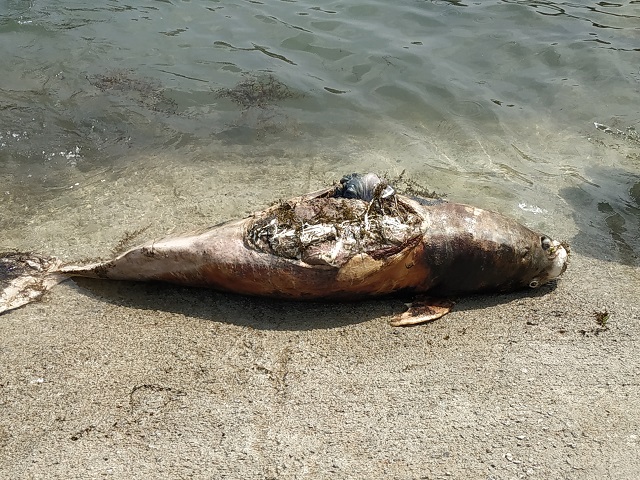
A stranded Indo-Pacific finless porpoise:
What types of information can be obtained from a dead Indo-Pacific finless porpoise?
Upon receiving a stranding report, AFCD will organize an investigation team to the site to investigate the case and collect tissue samples (if dead) of the stranded animal as soon as possible. Depending on the level of decomposition, samples of skin, blubber, liver, kidney, stomach, reproductive organs, skull and teeth will be collected for studying the cause of death and the life history (including feeding habit, growth and reproduction, ecotoxicology and stock structure) of the animal.
|
|
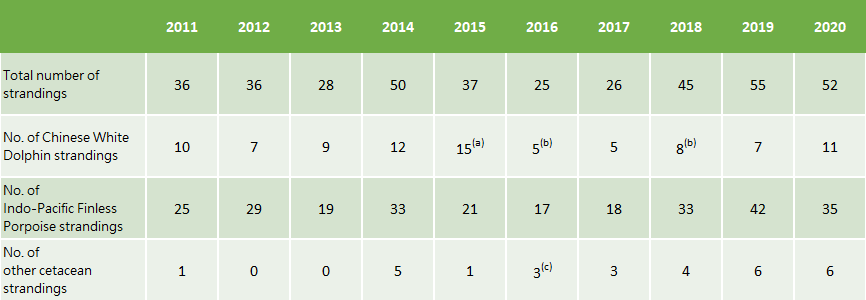
How many stranded cetaceans were found in Hong Kong waters in the past ten years?
(a) One stranding case of an injured Chinese white dolphin. The injured dolphin was transferred to Ocean Park Hong Kong for veterinary care and treatment. However, due to deterioration in condition, the dolphin was humanely euthanized. (b) One potential stranding case of an injured Chinese white dolphin. The individual did not strand and showed signs of recovery in subsequent observations. (c) One potential stranding case of a young Pantropical spotted dolphin discovered inside the water of a marina. The individual did not strand, left the marina and not sighted again in subsequent observations. |